Royal insiders discuss growing tension over non-royal access to the monarchy’s most private retreat
Balmoral Castle has always been more than just a residence. Hidden deep within the Scottish Highlands, it is the royal family’s most private refuge—a place where cameras are absent, traditions are sacred, and access is tightly controlled.
So when whispers began circulating that Queen Camilla’s on, Tom Parker Bowles, may have overstepped boundaries at Balmoral, it didn’t just raise eyebrows—it sparked a full-blown royal controversy.
And at the center of it? Princess Anne.
A Private Estate, Not a Public Palace
To understand why this story is gaining traction, one key fact matters: Balmoral is not part of the Crown Estate. Unlike Buckingham Palace or Windsor Castle, it is privately owned—passed down from monarch to monarch as personal property.
Queen Elizabeth II inherited it from her father. After her passing in September 2022, it became the private property of King Charles III.



That means access is not symbolic—it’s controlled. Carefully.
And for many within royal circles, Balmoral is not just property. It’s legacy.
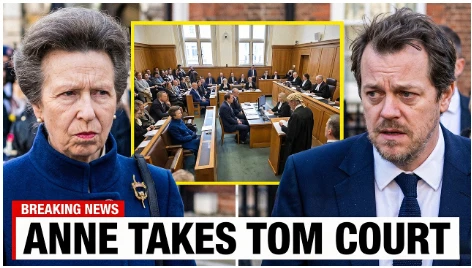
The Allegation That Sparked It All
According to ongoing reports and royal commentary, Tom Parker Bowles—Camilla’s son from her first marriage—was invited to Balmoral as a guest. That, in itself, is not unusual. Camilla’s children have occasionally attended informal royal gatherings and family events.
But what’s now being debated is whether that visit went beyond what would typically be expected of a guest.
Some royal observers claim Tom may have used the estate in ways that suggested a level of access or familiarity not usually granted to non-working royals or private individuals. These claims remain unconfirmed—but they’ve been enough to trigger serious discussion.
And reportedly, a reaction.
Enter Princess Anne
If there is one royal known for protecting tradition without hesitation, it is Princess Anne.
Daughter of Queen Elizabeth II, widely respected for her work ethic, and often described as the monarchy’s most disciplined figure, Anne has long been seen as a guardian of royal standards.
Her connection to Balmoral runs deep. She was there during Queen Elizabeth’s final days. She stood vigil beside her mother’s coffin. She helped oversee some of the most personal moments in the monarchy’s recent history.
To Anne, Balmoral is not just land—it’s memory, duty, and inheritance.
So when reports surfaced suggesting the estate may have been used in ways she considered inappropriate, insiders claim she didn’t confront the issue informally.
She took a more formal route.
Legal Action—or Strong Message?
Claims that Princess Anne “dragged” Tom Parker Bowles into court may be exaggerated in tone. In royal circles, such situations rarely explode into public trials.
Instead, they are often handled through legal channels—formal notices, solicitor letters, or internal legal reviews.
Even a legal letter, however, carries weight.
It signals seriousness. It sets boundaries. It sends a message without public confrontation.
And if Anne did involve legal counsel, it would align with her reputation: direct, firm, and focused on preserving what she believes must be protected.
More Than Just a Property Dispute
What makes this situation particularly complex is that it’s not just about Balmoral.
It’s about family—and the blurred lines between royal and non-royal members.
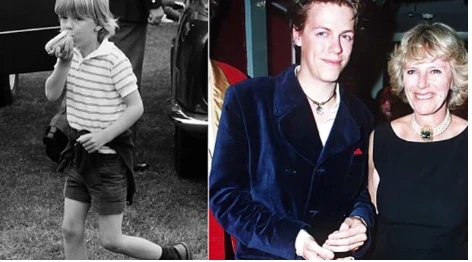
Tom Parker Bowles is not a royal. He holds no title, receives no public funding, and has no official role within the monarchy. He is a respected journalist and food critic, with a life entirely separate from royal duties.
Yet he is also the son of the Queen.
That dual identity creates tension.
Where does invitation end—and entitlement begin?
Who decides those limits?
And who enforces them?
A Deeper Divide Inside the Royal Family
The situation also reflects a broader, quieter divide within the royal family—one that has existed for years.
On one side: those born into the monarchy, raised within its rules, bound by its traditions.
On the other: those who entered through marriage, bringing their own families, perspectives, and expectations.
King Charles has spent years trying to blend these worlds—welcoming Camilla’s children into family settings, creating a sense of unity.
But unity doesn’t erase boundaries.
And when those boundaries appear to blur—especially in places like Balmoral—the reaction can be swift.

Where Does King Charles Stand?
For King Charles, this situation presents a delicate balance.
Support his sister, and risk alienating Camilla’s family.
Support his wife’s side, and risk undermining longstanding royal expectations.
There is no easy resolution.
And while nothing has been officially confirmed, the very existence of this debate reveals something important:
The monarchy is still negotiating its own identity.
What Happens Next?
If the issue escalates, it could force the palace to clarify something it has long avoided: the rules surrounding private royal property and who has access to it.
Because Balmoral is not just any estate.
It is where Queen Elizabeth chose to spend her final days.
It is where the royal family retreats when the world fades away.
And it is, for many, the most protected space in the monarchy.
For Princess Anne, protecting that space may not be optional.
It may be a responsibility.
And if that responsibility means drawing a line—even within her own extended family—then insiders believe she won’t hesitate.
Because in the royal world, the quietest conflicts often reveal the deepest truths.