“She Was Never One of Us”: The Chilling “Invisible Wall” That Sophie Saw Keeping Meghan at Arm’s Length from Day One.
It is the kind of quiet isolation that leaves no scars but changes a person forever. According to a series of stunning “harsh truths” attributed to Sophie, the palace didn’t reject Meghan with shouts or scandals; they rejected her with silence.
The Duchess of Edinburgh, long considered the “safe pair of hands” within the monarchy, has allegedly described a chilling atmosphere where Meghan was treated with impeccable politeness that carried the temperature of an Arctic winter. This wasn’t a sudden frost; it was a calculated, institutional distance that Sophie watched grow from a crack into a canyon.
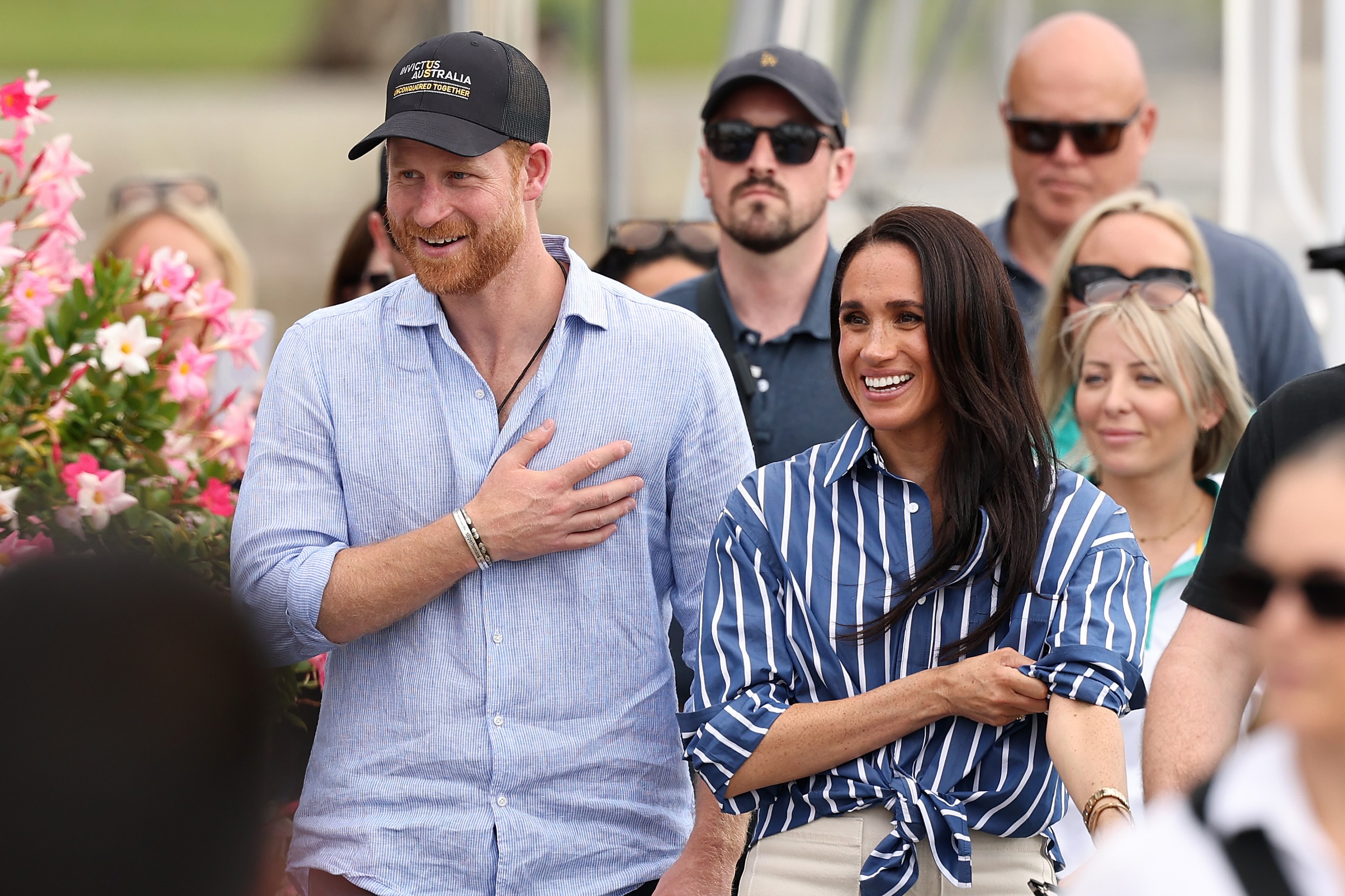
The “invisible wall” began with the small things—the things that don’t make it into the headlines but make a life. Sophie observed how conversations would subtly shift or simply evaporate the moment Meghan walked into a room. It was the “quiet distance” of a family that speaks in a shorthand developed over centuries—a language Meghan was never meant to learn.
While the public saw the “Fab Four” laughing at the Royal Foundation Forum, Sophie reportedly saw the “Outsider” protocol in full effect. It was the way Catherine’s gaze would linger just a second too long on a tradition being ignored, or the way the Queen’s measured pauses after a Meghan request felt like a door being gently, but firmly, closed in her face.



Meghan, for her part, reportedly tried to smash through that wall with “energy and ideas.” She wanted to modernize, to move faster, to make the royal machine “personal.” But in a world where every step is a thousand years old, her speed was seen as a threat to the equilibrium. Sophie watched as Meghan’s confidence was misinterpreted as arrogance, and her vision was seen as a lack of respect for the “active duty norm.”
The staff, the very heartbeat of the palace, felt the vibration of this clash. Sophie noticed the frustration of aides who had served the Crown for decades, now being asked to rework 500-year-old protocols by a woman who hadn’t yet spent 500 days in the country. The “Meghan wanted it this way” vs. “The Palace does it that way” battle wasn’t just about bridesmaid dresses or tiaras; it was a war for the soul of the institution.
And then there was Harry. Sophie watched with growing concern as the Prince’s protectiveness turned into a sharp, defensive armor. Every time he felt the “invisible wall” closing in on Meghan, he pulled her further away from the family rhythm. His loyalty was a shield, but as Sophie reportedly noted, that shield eventually became a cage. The more he defended her against “the Firm,” the more he confirmed to the family that they were no longer operating as one team.
The tipping point, the “tiara argument,” was more than just a dispute over jewelry. To Meghan, it was a test of her value. To the Queen, it was a test of the hierarchy. When the answer was “no,” the invisible wall became a fortress. Sophie witnessed the disappointment Meghan carried, a realization that she was an “inactive member” of the family’s heart long before she became an inactive member of the succession line.
As the wedding day approached, the fairytale was already fractured. Sophie reflects on a “wedding divided”—a ceremony where everyone hit their marks and played their parts with Oscar-worthy precision, but where the emotional space between the pews was wider than the Atlantic.
Sophie’s breaking of the silence is the final, devastating piece of the puzzle. It proves that the “Meghan vs. The Monarchy” narrative wasn’t a tabloid invention; it was an internal struggle that senior royals watched in slow motion, unable—or perhaps unwilling—to stop. The Duchess of Edinburgh’s “harsh truths” don’t just tell the story of a failed marriage between a woman and an institution; they tell the story of a woman who was invited to the party but was never given a chair at the table.
The “invisible wall” didn’t just keep Meghan out; it eventually pushed her away. And as Sophie’s revelations suggest, the Palace was more than happy to let the silence do the work.
Was the “invisible wall” a necessary protection for a thousand-year-old institution, or was it a cruel isolation that left a new bride with no choice but to run for her life?